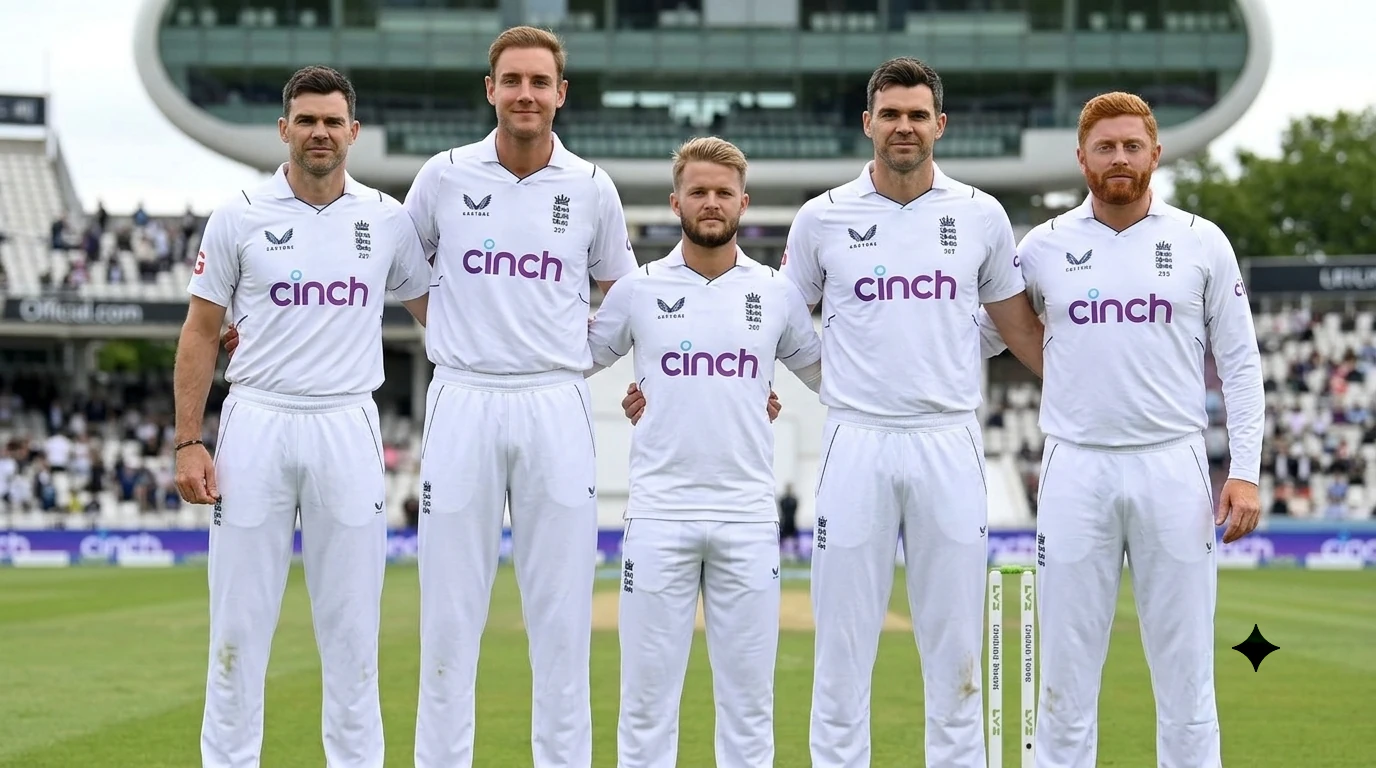
Ben Duckett stands about 5 feet 7 inches tall, or 170 centimetres, according to the height most commonly listed in public cricket profiles. His relatively compact build has attracted attention because he has succeeded as an attacking opening batter in a sport where many leading players are considerably taller. Yet Duckett’s career has never been defined by physical size alone. Quick hands, bold shot selection and a hard-earned return to international cricket have made him one of England’s most distinctive modern batters.
Born Ben Matthew Duckett on 17 October 1994, the left-hander rose through county cricket with Northamptonshire before establishing himself at Nottinghamshire and earning a second chance with England. His story includes early international promise, a long period outside the Test side and a successful comeback under England’s more aggressive batting philosophy.
As of July 2026, Duckett is 31 years old and remains an active professional cricketer. His public record is extensive on the field, while much of his family and relationship life has stayed private.
Ben Duckett’s Height and Physical Profile
Ben Duckett’s height is generally reported as 1.70 metres, which converts to approximately 5 feet 7 inches. The figure should be treated as a widely published profile measurement rather than a recently certified result from the England and Wales Cricket Board. Current official player pages have focused on his role, teams and playing record rather than listing his exact height.
Height figures for athletes sometimes vary by an inch because publishers round metric measurements differently. Since 170 centimetres equals just under 5 feet 7 inches, some unofficial sites may list Duckett closer to 5 feet 6 inches. The standard public figure remains 5 feet 7 inches.
Duckett appears shorter than many international cricketers, especially when standing beside tall fast bowlers or teammates. That contrast has helped make “Ben Duckett height” a frequent search, but his build also offers useful context for understanding his batting. He uses a low, compact setup and relies on balance, speed and timing rather than a long reach or an imposing hitting arc.
His stature has not prevented him from opening the batting against elite pace attacks. He has instead developed a method suited to his body, using quick movements and a wide range of scoring shots to pressure bowlers before they settle.
Early Life and Family
Ben Matthew Duckett was born on 17 October 1994 in Farnborough, London, England. He is English and has represented England in Test, One Day International and Twenty20 International cricket.
Detailed information about his parents, siblings and early household has not been widely documented in reliable public records. Duckett has generally kept his family background outside the centre of his public profile. Most coverage of his youth has focused on his development as a cricketer rather than his relatives or home life.
He attended Stowe School in Buckinghamshire, where his cricketing ability became increasingly clear. Stowe has a strong sporting tradition, and Duckett developed as both a batter and wicketkeeper during his school years. His talent eventually brought him into Northamptonshire’s professional system.
Duckett’s early progression reflected more than natural hand-eye coordination. He learned to play with freedom while building the technical skills required for county cricket, where young players must adjust to longer innings, different pitch conditions and experienced professional bowlers.
Starting His Career at Northamptonshire
Duckett made his first-class debut for Northamptonshire in 2013. Still a teenager, he entered a county environment that gave him opportunities to develop across multiple formats rather than limiting him to one type of cricket.
He quickly became known for attacking batting and the ability to score in unusual areas. As a left-hander, he could disrupt conventional bowling plans by cutting, sweeping and reverse-sweeping with confidence. He also offered wicketkeeping ability, though batting became his main professional role.
The 2016 domestic season transformed his reputation. Duckett scored heavily across formats and helped Northamptonshire win the T20 Blast. His performances earned him both the Professional Cricketers’ Association Players’ Player of the Year award and the Young Player of the Year award.
Winning both honours in the same year was a major distinction. It showed that fellow professionals regarded him not merely as a promising young player, but as one of the strongest performers in English domestic cricket.
That season brought an England call-up and moved him from county prospect to international cricketer. His rise appeared rapid, though the next stage of his career would prove far less straightforward.
First England Opportunity
Duckett made his One Day International debut against Bangladesh on 7 October 2016. He entered international cricket with a reputation for fearless stroke play and soon showed why selectors had been interested in him.
His Test debut followed on 20 October 2016 during the same tour. England hoped his ability to attack spin would offer a useful option in Asian conditions, where slow bowling often controls the game. Duckett’s sweeps and reverse sweeps made him difficult to contain when he was in rhythm.
The early results were mixed. He produced promising innings in Bangladesh, but India’s spin attack exposed weaknesses in his defensive method later that year. Ravichandran Ashwin, in particular, created serious problems for him during England’s tour of India.
Duckett lost his place and did not immediately return to the Test side. His first international spell had lasted only a short period, leaving him with the challenge of proving that he could adapt rather than remaining a gifted but vulnerable attacking player.
Setbacks and the Move to Nottinghamshire
The years after Duckett’s first England appearances included professional setbacks and questions about his maturity. During an England Lions tour in Australia in late 2017, he was suspended following an off-field incident involving senior player James Anderson. The matter damaged Duckett’s standing at a time when he was already trying to rebuild his international prospects.
He later moved from Northamptonshire to Nottinghamshire, joining the club ahead of the 2019 season. The transfer gave him a fresh setting and access to a squad with strong ambitions across domestic competitions.
At Nottinghamshire, Duckett gradually rebuilt his case through consistent run-scoring. He became an important top-order batter and showed that his aggressive instincts could work in first-class cricket as well as shorter formats.
His 2022 County Championship season proved decisive. Duckett scored more than 1,000 runs at an average above 70 as Nottinghamshire secured promotion from Division Two. Those performances earned him selection for England’s Test tour of Pakistan.
The recall came more than six years after his Test debut. By then, Duckett was a more experienced player entering an England side that actively encouraged positive batting.
Test Comeback and Career Breakthrough
Duckett returned to Test cricket in Pakistan in December 2022 and immediately looked more comfortable than he had during his first international spell. Opening the batting, he scored his maiden Test century in Rawalpindi as England adopted an exceptionally aggressive approach.
His natural game suited the strategy associated with captain Ben Stokes and head coach Brendon McCullum. Duckett did not need to reshape himself into a cautious traditional opener. England wanted him to score, challenge field settings and keep bowlers under pressure.
The important difference was that he now had more experience behind his attacking choices. He had spent years facing county attacks, learning from dismissals and improving his understanding of when to take risks.
Duckett soon established himself as a regular Test opener. He formed a contrasting partnership with Zak Crawley, another aggressive batter who stands much taller. Their physical differences were obvious, but both aimed to move the game forward quickly.
His second Test century came against Pakistan, while a career-best score of 182 followed against Ireland at Lord’s in 2023. That innings confirmed that his comeback was not based only on favourable conditions in Pakistan.
Duckett also strengthened his place in England’s limited-overs plans. His adaptable scoring method allowed him to bat in different positions and maintain a high tempo without depending solely on six-hitting.
Why His Height Works With His Batting Style
Duckett’s height gives him a naturally low centre of gravity. That can help him stay balanced while cutting, pulling or sweeping, particularly when he changes position late in a delivery.
His quick hands are central to his success. Rather than producing power through a large swing, he often uses the speed of the ball and directs it into gaps. This allows him to score boundaries against fast bowling even without the reach associated with taller batters.
Against spin, his compact build helps him get low for conventional and reverse sweeps. He has played those shots throughout his senior career, using them not as occasional tricks but as regular scoring options.
There are also challenges. Short-pitched bowling can rise sharply toward a shorter batter’s upper body, particularly on fast Australian surfaces. Duckett must judge whether to pull, duck or sway while maintaining control against bowlers who can exceed 90 miles per hour.
His career shows that height can shape a player’s method without setting a fixed limit on performance. Duckett has succeeded because he has built his technique around his own proportions rather than trying to copy a taller opener.
Major Performances and Public Recognition
Duckett’s return to England brought several innings that strengthened his reputation. His 182 against Ireland in 2023 became his highest Test score and displayed his ability to sustain an attacking pace across a long innings.
During England’s 2024 home season, he continued to produce fast starts at the top of the order. His scoring rate often changed the rhythm of matches, forcing captains to adjust fields early.
In February 2025, Duckett scored 165 against Australia in the ICC Champions Trophy. Although England’s campaign was disappointing, the innings ranked among his most important performances in one-day cricket.
A few months later, he made 149 against India at Headingley in June 2025. England were chasing 371 in the fourth innings, and Duckett’s century gave the team the platform for a memorable five-wicket victory. The innings combined his usual attacking intent with the discipline needed for a demanding final-day chase.
His form dipped during the 2025–26 Ashes series in Australia. England lost the series 4–1, and Duckett failed to produce the large scores expected of an established opener. The tour renewed debate about his technique against high pace and bounce.
Duckett responded by returning to county cricket and focusing on first-class preparation. In 2026, he scored an unbeaten double century for Nottinghamshire and later made 113 against New Zealand at Trent Bridge. The century showed his ability to recover after a difficult period rather than allowing one poor tour to define his place.
Personal Life and Relationships
Duckett has kept much of his private life away from formal interviews and official profiles. Reliable public information about his current relationship status is limited, and no marriage or children have been publicly confirmed through authoritative sources.
Online biography pages sometimes make claims about athletes’ partners or dating histories without clear evidence. Those claims should not be treated as established facts simply because they appear repeatedly. Duckett’s professional career remains far better documented than his personal relationships.
He is active enough in public life to promote cricket and appear in team media, but he does not appear to have built a public identity around his family. That boundary deserves respect, especially when private details have not been confirmed by Duckett himself.
Net Worth and Income Sources
Ben Duckett’s exact net worth is not publicly confirmed. No verified financial statement provides a dependable total for his personal wealth, and online estimates often lack evidence.
His income is likely drawn mainly from professional cricket. This includes Nottinghamshire contracts, England match fees or central arrangements, tournament appearances, prize money and possible commercial endorsements.
The value of cricket contracts can change from year to year depending on selection, format and tournament participation. For that reason, a precise net-worth figure would create false certainty. It is more accurate to say that Duckett has built a successful career as an England international and senior county professional without assigning an unsupported monetary total.
Public Image and Current Status
Duckett’s public image combines confidence with resilience. He is known for batting without visible fear, but his career also includes mistakes, dropped selections and long periods of rebuilding.
His willingness to attack has made him a natural symbol of England’s modern Test approach. Supporters value the speed at which he can change a match, while critics sometimes question whether his method leaves enough room for caution in difficult conditions.
Both views reflect the same quality: Duckett rarely plays anonymously. His innings tend to affect the pace of a game, whether he succeeds or falls while trying to force the issue.
As of July 2026, he remains an active England and Nottinghamshire batter. He has passed 3,000 Test runs, scored centuries in both Test and ODI cricket and secured a far longer international career than seemed likely after his first England opportunity ended in 2016.
Frequently Asked Questions
How tall is Ben Duckett?
Ben Duckett is widely listed as 5 feet 7 inches tall, or about 170 centimetres. Official ECB and Nottinghamshire profiles do not currently publish a separate certified height measurement.
How old is Ben Duckett?
Ben Duckett was born on 17 October 1994. He is 31 years old as of July 2026 and will turn 32 in October 2026.
Where was Ben Duckett born?
He was born in Farnborough, London, England. He is an English national and has represented England in all three major international formats.
Which county does Ben Duckett play for?
Duckett plays for Nottinghamshire. He joined the club from Northamptonshire ahead of the 2019 domestic season.
Is Ben Duckett married?
A marriage has not been publicly confirmed through reliable official sources. Duckett keeps his relationship and family life relatively private.
What is Ben Duckett’s net worth?
His exact net worth is not publicly known. Figures published by celebrity wealth sites should be treated cautiously because they are generally estimates without access to his contracts, assets or liabilities.
What is Ben Duckett best known for?
He is best known as an aggressive left-handed opening batter for England. Major career highlights include his Test comeback in Pakistan, a score of 182 against Ireland, 165 against Australia in the 2025 Champions Trophy and 149 during England’s successful Test chase against India at Headingley in 2025.
Conclusion
Ben Duckett’s height may be the detail that first brings many readers to his story, but it is not the feature that explains his career. At about 5 feet 7 inches, he has succeeded by developing a compact, fast and highly personal batting method.
His path has not been smooth. Early selection was followed by technical struggles and a long absence from Test cricket, while later success was tested again during a difficult Ashes series. Each setback required him to return to county cricket and prove his value through runs.
Duckett now occupies a clear place in England’s modern cricket era. He represents an approach built on pressure, scoring intent and trust in individual strengths rather than one accepted model of how an opening batter should look or play.
His reputation will ultimately rest on performances rather than measurements. The lasting point of his story is that elite sport rarely rewards appearance alone; it rewards players who understand their own game and keep adapting when opponents find ways to challenge it.