Do Cadillac Lyriq Driving Modes Affect Range?
Tags: do the driving modes in cadillac lyriq offer different ranges or battery usages?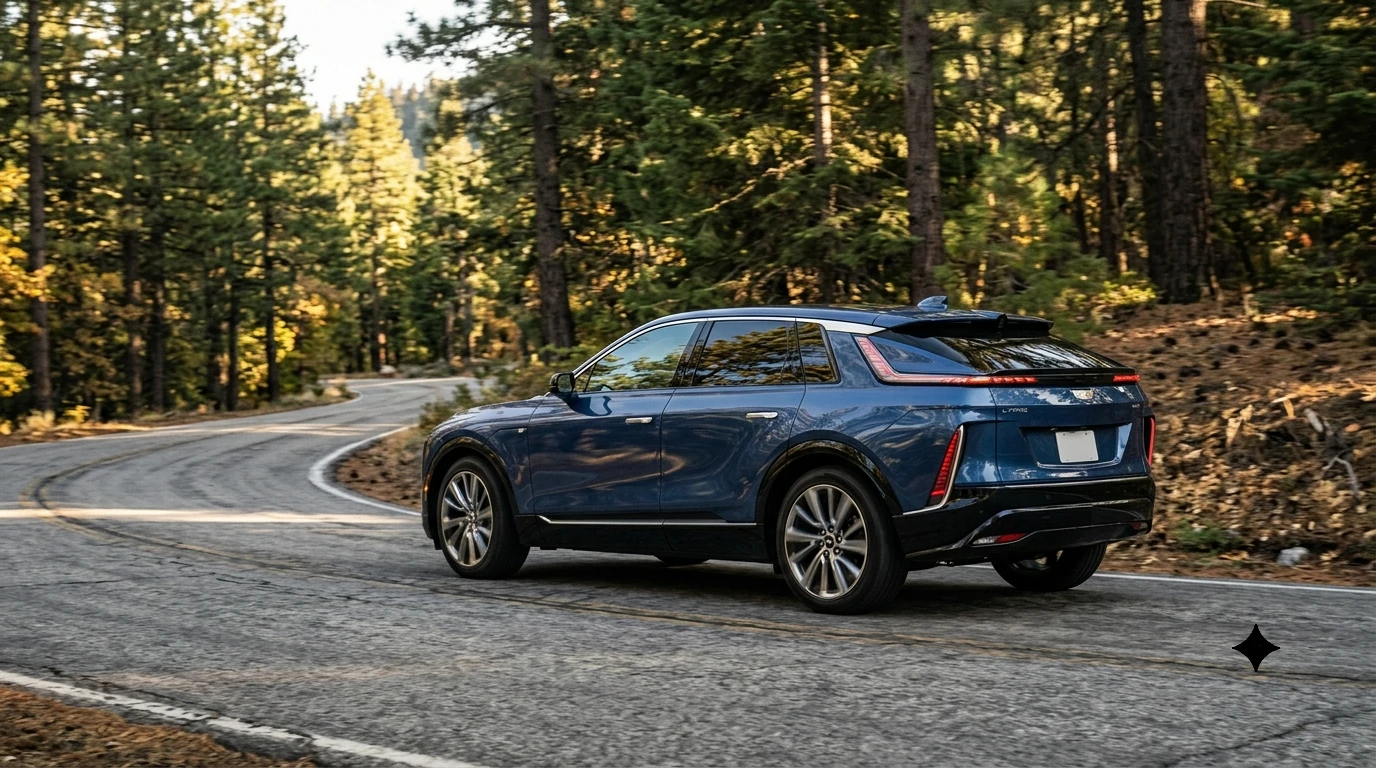
The Cadillac Lyriq’s driving modes can change how much battery energy the vehicle uses, but they do not give the SUV separate, fixed driving ranges. Selecting Tour, Sport, Snow/Ice, or My Mode does not alter the battery’s capacity or assign a new official mileage figure. Instead, each mode changes how systems such as the accelerator, steering, suspension, electric all-wheel drive, and vehicle sound respond.
Those changes can affect real-world efficiency, especially if a mode encourages stronger acceleration or keeps more performance hardware active. The driver’s behavior, however, usually matters more than the mode selection by itself. Speed, weather, cabin heating, road conditions, tire pressure, elevation, and repeated acceleration can all have a larger effect on the number of miles available from a charge.
For most Lyriq owners, Tour is the best setting for predictable everyday efficiency. Sport may increase battery use if the driver takes advantage of its quicker response, while Snow/Ice is designed for traction rather than range. The 2026 Lyriq-V creates a clearer tradeoff because Cadillac states that extended use of its Velocity Max performance feature will reduce driving range.
How Cadillac Lyriq driving modes affect battery use
A driving mode is a software calibration, not a separate source of energy. The Lyriq uses the same high-voltage battery regardless of which mode appears on the infotainment screen. Changing modes at 70 percent charge does not increase or decrease the amount of electricity already stored in the pack.
What changes is how the vehicle responds to the driver and the road. Accelerator mapping may become sharper or more relaxed. Steering effort can change, adaptive suspension settings may become firmer, and an all-wheel-drive model may adjust how it uses its front and rear motors.
These differences can influence energy consumption in two ways. Some settings may directly change the operation of propulsion, cooling, suspension, or all-wheel-drive systems. More often, the mode changes the driver’s behavior by making rapid acceleration easier or more tempting.
That distinction explains why Cadillac does not publish a separate official range for each mode. There is no verified Tour-mode range, Sport-mode range, or Snow/Ice-mode range for the standard Lyriq. EPA estimates apply to the tested vehicle configuration, including its drivetrain and equipment, rather than to every selectable setting.
A driver could use Sport Mode gently and record energy use close to Tour. Another driver could select Tour and consume far more electricity by traveling at high speed with the cabin heater running. The mode matters, but it is only one part of the energy-use picture.
Tour, Sport, Snow/Ice, and My Mode compared
Tour Mode
Tour is the Lyriq’s normal setting for everyday city and highway driving. Cadillac describes it as a balance between comfort and handling, with smooth responses suited to routine use. The company does not label it as a dedicated Eco mode, but it is the most practical baseline for drivers trying to make their range predictable.
Tour’s calmer accelerator response can make it easier to avoid abrupt power demands. A gradual pedal calibration helps the driver accelerate smoothly, maintain momentum, and reduce repeated surges of energy use. Those habits are usually more efficient than strong acceleration followed by frequent braking.
Tour does not restrict the Lyriq to low power. The vehicle can still accelerate quickly if the driver presses the pedal deeply. Its efficiency advantage comes mainly from its more measured response and the way that response supports relaxed driving.
Owners should not expect Tour to add a fixed number of miles to the dashboard estimate. A fast motorway trip in Tour can use more energy than a slower journey in Sport. For range-focused driving, Tour works best when paired with moderate speed, steady acceleration, and restrained climate use.
Sport Mode
Sport changes the Lyriq’s character by making accelerator response more immediate. Depending on the vehicle’s equipment, it can also adjust steering effort, suspension tuning, adaptive cruise control behavior, and enhanced motor sound. The aim is stronger response and a more performance-focused driving experience on dry roads.
Sport does not automatically consume a large amount of extra electricity simply because it has been selected. At a steady speed on a flat road, with the same climate settings and the same pedal inputs, the difference may be small. The main concern is that the sharper pedal mapping makes higher power requests easier.
Repeated rapid acceleration draws energy from the battery quickly. Regenerative braking can recover part of that energy when the vehicle slows, but it cannot return everything used to build speed. Energy is lost through aerodynamic drag, rolling resistance, heat, and the conversion process itself.
This is why there is no reliable universal percentage for the Sport Mode range penalty. Cadillac does not state that Sport reduces range by 5 percent, 10 percent, or any other fixed amount. The loss depends on how the vehicle is driven and the conditions in which it is used.
A driver who prefers Sport’s steering and suspension but keeps a steady pace may see little change. A driver who repeatedly uses full or heavy acceleration may see a clear reduction in miles per kilowatt-hour and a lower projected range.
Snow/Ice Mode
Snow/Ice Mode is designed to improve control on slippery surfaces. It softens accelerator response and may adjust electric all-wheel-drive operation on equipped models. The goal is to deliver power more carefully so the tires are less likely to lose traction.
Cadillac does not publish a separate energy-use figure for Snow/Ice Mode. The mode may alter motor operation, but the weather conditions that require it usually create a much larger range penalty. Cold temperatures, snow-covered roads, winter tires, low tire pressure, cabin heating, and denser air can all increase consumption.
Owners sometimes select Snow/Ice and then notice a sharp fall in the estimated range. That does not prove the mode caused the entire decline. The vehicle’s range calculation may be reacting to lower temperatures, heater use, difficult road surfaces, or a cold battery.
Snow/Ice should be chosen for safety, not avoided to protect a range number. Cadillac also advises caution with strong regenerative settings on slippery roads because abrupt deceleration can reduce stability. A small possible efficiency difference is less important than predictable traction.
My Mode
My Mode allows the driver to combine preferred settings rather than accept one complete factory preset. Depending on equipment, the owner may be able to adjust acceleration feel, steering, braking, suspension, and motor sound. Acceleration settings can include relaxed, normal, or sportier responses.
Because My Mode is customizable, it does not have one energy-use profile. A setup with relaxed acceleration and comfort-focused chassis settings may behave much like Tour. A setup with Sport acceleration and firmer responses may encourage greater battery consumption.
Acceleration feel is likely to have the clearest effect because it changes how the vehicle responds to pedal movement. Steering weight and enhanced sound are less likely to make a meaningful difference to propulsion energy on their own. Cadillac does not provide separate range figures for individual My Mode combinations.
My Mode can remain active after the vehicle is restarted. That matters because an owner may become used to a sharper accelerator setting and forget that it was selected. A gradual rise in energy consumption may then appear to be a battery or weather problem when driving behavior has also changed.
One-Pedal Driving and regenerative braking
One-Pedal Driving is related to efficiency, but it is not the same as Tour, Sport, or Snow/Ice. It changes how the Lyriq slows when the driver lifts off the accelerator. The system can provide strong regenerative deceleration and may bring the vehicle to a stop without routine use of the brake pedal.
Regenerative braking turns the electric motor into a generator during deceleration. Part of the vehicle’s motion is converted back into electricity and returned to the high-voltage battery. This reduces the amount of energy that would otherwise be lost as heat through the friction brakes.
The Lyriq offers different One-Pedal Driving settings, including Normal and High. Higher regeneration can be useful in urban traffic, where drivers slow frequently for junctions, signals, and congestion. It can also make speed control easier once the driver becomes familiar with the pedal response.
Stronger regeneration does not guarantee the longest range in every situation. The most efficient action is often to preserve momentum rather than slow down and accelerate again. A driver who repeatedly lifts too sharply, loses speed, and then adds power may gain little from the extra regeneration.
The Lyriq also offers Regen on Demand through a steering-wheel control. This gives drivers access to stronger regenerative braking without requiring them to use One-Pedal Driving all the time. It can be useful for approaching traffic or controlling speed on a descent.
Regeneration may be limited when the battery is very cold or close to full charge. A nearly full battery has less room to accept recovered energy, while a cold pack may not be able to receive power at the normal rate. That is why charging to 100 percent immediately before a long downhill trip can reduce the amount of regenerative braking available.
Why the displayed range changes
The remaining-range figure on the dashboard is an estimate, not a direct measurement of battery health. It uses recent energy consumption, driving patterns, climate settings, temperature, and other operating conditions to predict how far the vehicle may travel.
Switching to Sport may not cause the displayed number to fall immediately. The system may need time to observe whether the driver is using more power. If several trips include stronger acceleration or higher speeds, the estimate may gradually adjust downward.
The opposite can happen after returning to calmer driving. A slower trip in mild weather with less cabin heating may cause the projected range to rise. The vehicle has not created extra electricity; it has updated its prediction based on lower recent consumption.
This is why a sudden change in displayed miles is not proof of battery degradation. Fast motorway driving, cold weather, a steep climb, heavy climate use, preconditioning, towing, or carrying extra weight can all alter the estimate. Battery condition cannot be judged from one range reading.
Actual efficiency provides a better basis for comparison. Owners who want to test the effect of a mode should monitor miles per kilowatt-hour or kilowatt-hours per 100 miles over repeated routes. A single dashboard estimate before and after changing a setting is not a controlled test.
Official range figures and recent model years
Cadillac’s official range figures vary by drivetrain and vehicle configuration, not by selectable mode. For the 2026 Lyriq, Cadillac lists up to 326 miles of EPA-estimated range for rear-wheel-drive models and up to 319 miles for dual-motor all-wheel-drive versions. The 2026 Lyriq-V carries a lower EPA estimate of 285 miles.
EPA data also shows differences in energy use between versions. Some 2026 rear-wheel-drive Lyriq configurations are rated at about 37 kilowatt-hours per 100 miles. All-wheel-drive versions are listed at higher consumption levels, while the Lyriq-V uses more energy because of its performance-focused hardware and calibration.
Those figures do not show what the vehicle will achieve in Tour or Sport. They are standardized results for complete vehicle configurations. Wheels, tires, drivetrain, weight, equipment, and motor setup can all affect the certified rating.
Earlier model years also carried different estimates. The 2024 rear-wheel-drive Lyriq was rated at 314 miles, while the all-wheel-drive model was rated at 307 miles. For 2025, the highest estimates rose to 326 miles for rear-wheel drive and 319 miles for certain all-wheel-drive versions.
These changes should not be interpreted as proof that Cadillac gave later vehicles a more efficient Tour Mode. Model-year ratings can change because of software updates, equipment combinations, test classifications, tires, motor calibration, or other production changes. The window sticker on the specific vehicle remains the best source for its certified range.
Trim names can also cause confusion. A Lyriq Sport trim is not permanently locked into Sport Mode. Sport is an equipment and styling grade, while Sport Mode is a setting the driver can select or leave off.
The Lyriq-V has a clearer performance penalty
The 2026 Lyriq-V adds performance controls beyond those in the standard model. Its V-Mode allows the driver to configure acceleration, braking, steering, suspension, motor sound, and other performance settings. It also offers Velocity Max, which prepares the vehicle to deliver its highest available output.
Cadillac states that extended operation in Velocity Max will reduce vehicle range. The feature changes accelerator mapping, motor capability, propulsion cooling, electric all-wheel-drive operation, and sound. Those systems support maximum performance but require additional energy.
The Lyriq-V can produce up to 615 horsepower and 650 pound-feet of torque with Velocity Max active. Access to that output does not mean the vehicle constantly uses maximum power, but repeated hard acceleration can drain the battery quickly. Cooling systems may also work harder during sustained performance driving.
A brief use of Velocity Max will not produce one predictable mileage loss. The result depends on how long it remains active and how aggressively the vehicle is driven. Cadillac’s warning is aimed at repeated or extended use rather than a single short acceleration.
The Lyriq-V’s 285-mile EPA estimate already reflects a vehicle built for higher performance. That figure should not be treated as a promise during track driving or repeated full-power launches. Maximum acceleration and maximum range are competing goals.
What matters more than the driving mode
Highway speed often has a greater effect on Lyriq range than the difference between Tour and Sport. Aerodynamic resistance increases rapidly as speed rises, forcing the motors to use more power to maintain pace. Traveling at 75 or 80 mph can consume much more energy than driving at 60 or 65 mph.
Cabin temperature control can also make a large difference. Heating the interior in cold weather draws energy from the high-voltage battery. Heated seats may use less energy than raising the temperature of the entire cabin, though passenger comfort and visibility should remain the priority.
Preconditioning while the Lyriq is connected to a charger can reduce the amount of stored battery energy needed after departure. It can warm or cool the cabin and prepare the battery before the trip begins. The benefit is greatest when the vehicle can draw that energy from the grid rather than from the pack.
Tires affect efficiency through rolling resistance. Low pressure, winter tires, larger wheels, and unsuitable replacement tires may all increase consumption. Regular pressure checks are especially important during cold weather because tire pressure falls as temperatures drop.
Elevation, wind, rain, snow, cargo, and towing can also reduce range. A climb uses more energy, while a descent may return some of it through regeneration. Strong headwinds and wet roads increase resistance even if the driver maintains the same speed.
The practical lesson is to examine the whole trip before blaming the selected mode. A cold, high-speed journey in Tour may use far more electricity than a mild, low-speed trip in Sport. Mode selection matters most when it changes the way the driver accelerates or how the powertrain operates.
Common misunderstandings
One common misunderstanding is that each mode has its own official range. Cadillac does not provide separate EPA figures for Tour, Sport, Snow/Ice, or My Mode. The official number belongs to the vehicle configuration tested by the EPA.
Another mistake is assuming that selecting Sport immediately reduces the battery’s capacity. The stored energy does not change when the mode changes. Sport may increase the rate of consumption, but it does not shrink the battery.
Owners may also confuse a lower range estimate with permanent battery damage. The display reacts to recent conditions and energy use, so it can fall after fast driving or heavy heater use. A later trip under better conditions may cause it to rise again.
One-Pedal Driving is sometimes treated as a source of free range. It can recover energy during slowing, but it cannot recover all the electricity used during acceleration. Smooth speed control and early anticipation are still essential.
Snow/Ice Mode is also blamed for winter range loss that is mainly caused by cold temperatures and heating demand. Its main purpose is traction. Drivers should choose it when conditions require it rather than prioritizing a small and uncertain efficiency difference.
Frequently Asked Questions
Does Sport Mode reduce Cadillac Lyriq range?
Sport Mode can reduce real-world range if its sharper response leads to harder acceleration or more aggressive driving. Cadillac does not publish a fixed percentage loss, so the effect varies by driver, speed, weather, and route.
Is Tour Mode the most efficient setting?
Tour is the best general setting for smooth, predictable daily driving and is usually the sensible choice for range-focused owners. It does not have a separate official range, and its benefit can be outweighed by high speed, cold weather, or heavy climate use.
Does changing modes change the battery capacity?
No. Selecting a different mode does not change the battery’s capacity or state of charge. It changes how the vehicle’s accelerator, steering, suspension, braking, and all-wheel-drive systems respond.
Does Snow/Ice Mode use more battery?
Cadillac does not provide a fixed energy penalty for Snow/Ice Mode. Winter temperatures, cabin heating, snow, and winter tires usually have a larger effect on consumption than the mode itself.
Can One-Pedal Driving increase range?
One-Pedal Driving can recover more energy during deceleration and reduce reliance on the friction brakes. The benefit is greatest in stop-and-go driving, but preserving momentum is still more efficient than repeatedly slowing and accelerating.
Why does my Lyriq’s range estimate change so much?
The estimate responds to recent driving, speed, temperature, HVAC use, terrain, and other conditions. A change in the displayed figure does not necessarily mean the battery has gained or lost usable capacity.
Does Velocity Max reduce Lyriq-V range?
Yes. Cadillac states that extended use of Velocity Max will reduce range because it prepares the motors, cooling system, pedal response, and all-wheel-drive system for maximum performance.
Conclusion
The Cadillac Lyriq’s driving modes can change battery use, but they do not provide separate fixed ranges. Tour, Sport, Snow/Ice, and My Mode alter vehicle response, and those changes may influence efficiency through both software behavior and driver input.
Tour is the safest baseline for drivers seeking steady consumption. Sport can use more energy when its quicker response encourages hard acceleration, while Snow/Ice should be selected for traction rather than judged as a range setting.
The Lyriq-V makes the tradeoff more direct because Cadillac confirms that extended Velocity Max use reduces range. In every version, though, speed, climate demand, weather, tires, and driving style remain major factors.
The most useful approach is to select the mode that suits the road and monitor actual energy consumption over time. The dashboard estimate is a forecast, while miles per kilowatt-hour across repeated trips provides a clearer picture of how a mode affects a particular driver.